


Blog
Softcover Glued Book Printing Explained

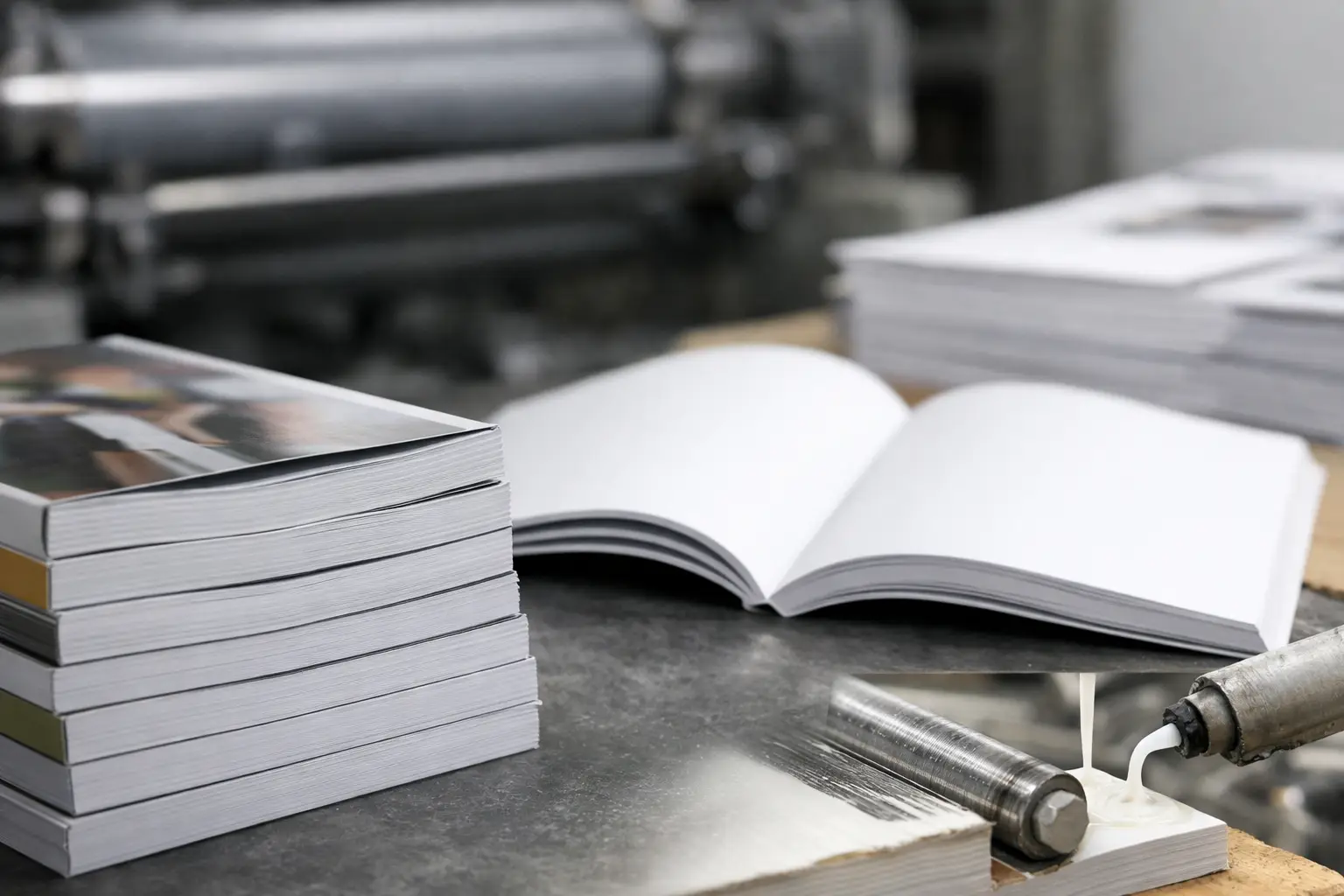
A stapled booklet works well until the page count starts creeping up, the cover needs to feel more substantial, or the finished piece has to sit on a desk and look the part. That is usually the point where softcover glued book printing becomes the better option. For businesses, schools, charities and event organisers, it offers a smart middle ground between a basic booklet and a hardback book.
If you are ordering print for practical use rather than for show, this format makes a lot of sense. It is tidy, professional and cost-effective for longer documents, especially when you need something that looks polished without pushing the budget too far.
What softcover glued book printing actually means
Softcover glued book printing is commonly used for books, manuals, catalogues, reports and thicker brochures that need a square spine rather than folded and stapled pages. The inside pages are gathered together, trimmed, and then fixed into a soft cover using strong adhesive along the spine.
You may also hear this described as perfect bound printing. In day-to-day buying terms, the main thing to know is how it looks and behaves. It gives you a paperback-style finish, with a printable spine and a cleaner, more substantial appearance than a saddle-stitched booklet.
That spine matters more than many buyers expect. It helps the document look more established, especially if it will be handed to customers, used in meetings, displayed at reception, or kept on file for repeat use.
When softcover glued book printing is the right choice
This binding style suits documents that are too thick for staples and too important to look temporary. Product catalogues are a common example, particularly where you have multiple pages of stock lines, pricing or seasonal ranges. Training manuals, onboarding packs and educational resources also fit well because they benefit from a book-like format that can handle regular handling.
For businesses, this is often the right choice when the printed piece needs to support sales or operations over time. Think company handbooks, tender documents, annual reports, lookbooks, event programmes or property brochures with a higher page count.
It is not always the best fit, though. If your document needs to lie completely flat on a table, spiral binding may be easier to use. If your page count is low, stapled booklets are often more economical. And if the publication is expected to last for years under heavy use, a hardback or specialist binding may be worth considering.
Why businesses choose a glued softcover finish
The biggest advantage is presentation. A glued softcover book looks more premium than a stapled booklet without the cost and weight of hardback production. That makes it a practical choice for organisations that want a professional result while keeping ordering simple and affordable.
There is also more room to work with from a branding point of view. A printed spine gives extra visibility and makes storage easier, especially if the books will be shelved in offices, schools or reception areas. That can be useful for reference guides, internal documents and catalogues that need to stay organised.
Another reason buyers choose this format is page capacity. Once you move into thicker documents, staples stop being a sensible option. Glued binding handles larger page counts more neatly and gives the finished product a stronger, cleaner edge.
What to think about before placing an order
Page count is one of the first things to check. Glued binding works best when there is enough thickness in the spine to hold the pages securely and create that square-backed look. Very slim documents usually suit other formats better.
Paper choice also affects the result. Heavier paper can feel more premium, but it also adds bulk and changes how the book opens. For image-heavy publications such as brochures or catalogues, a coated stock may help colours appear sharper. For manuals, reports or text-led documents, an uncoated stock can feel easier to read and write on.
Cover stock deserves separate attention. A sturdier cover helps the finished book feel more durable and protects the inside pages better in transit and everyday use. If the document will be posted out, carried to events or passed between staff, this matters.
Then there is artwork setup. With glued books, the spine width is part of the final design, so it needs to be calculated correctly. Margins near the spine also need care, because text or images placed too close to the binding edge can become awkward to read.
Softcover glued book printing and design practicalities
Designing for this format is not difficult, but a few simple decisions make a big difference. The first is to avoid cramming content into the inner margins. Unlike some wire-bound documents, a glued book will not open completely flat, so pages need enough breathing room near the spine.
The second is to treat the cover as a full wraparound piece rather than just a front page. The front cover, spine and back cover all work together. If the publication is customer-facing, that spine is worth using properly with a title, issue name or brand mark where space allows.
It also helps to think about how the publication will be used in real life. A sales catalogue handled at a trade show may need stronger visual impact. A staff manual may need clearer sectioning, tab-style design cues and a finish that favours readability over shine.
Cost, turnaround and value
Buyers often assume glued books are expensive, but that is not necessarily the case. Compared with hardback formats, they are usually much more affordable. Compared with stapled booklets, they may cost more per unit, but the higher page capacity and stronger presentation often justify it.
Turnaround depends on the specification, quantity and finishing requirements. A straightforward run of softcover books can be produced quickly, but more complex jobs with heavier covers, specialist lamination or larger volumes may need extra production time. If your deadline is fixed, it is always better to confirm timings before finalising the artwork.
Value comes from matching the format to the purpose. If the book is helping you sell, train, inform or present your organisation professionally, paying a little more than a basic booklet can be a sensible move. Done properly, it adds credibility without making the job overcomplicated.
Common uses for softcover glued book printing
This format covers a wide range of business and organisational needs. Retail and wholesale businesses use it for catalogues and product guides. Schools and training providers use it for course materials and prospectuses. Charities and community groups use it for reports, programmes and fundraising publications.
It is also useful for branded documents that need to feel permanent rather than disposable. If you are printing something people will keep for weeks or months, a glued softcover book often looks more suitable than a lighter booklet.
For customers ordering online, that practical balance is a big part of the appeal. You get a more finished result, straightforward production, and a format that works across many sectors without needing specialist print knowledge. That is one reason businesses using Conkea for day-to-day print often choose it when a booklet no longer feels substantial enough.
How to decide if it is right for your job
The easiest way to judge is to ask three simple questions. Does the page count make stapling unsuitable? Does the document need a more professional shelf-ready look? Will people keep and use it rather than glance at it once and throw it away? If the answer is yes to most of those, glued softcover binding is probably worth considering.
If your priority is the lowest possible cost, a stapled booklet may still be the better fit. If usability on a desk matters more than appearance, another binding style could win. But if you need a neat, credible and affordable format for longer documents, softcover glued book printing is often the most sensible choice.
A well-printed book does not need to be flashy to do its job. It just needs to look right, hold together properly and make the content easier to take seriously.


